
“You miss 100% of the shots you don’t take.”
It is a familiar line, often repeated, easy to accept in theory. In practice, the moment is less certain.
A defender closes. A teammate calls for the ball. The game speeds up. And in that space, players hesitate not because they cannot make the shot, but because they are thinking about the consequence of missing it.
At Miller School, that hesitation is not part of the equation.
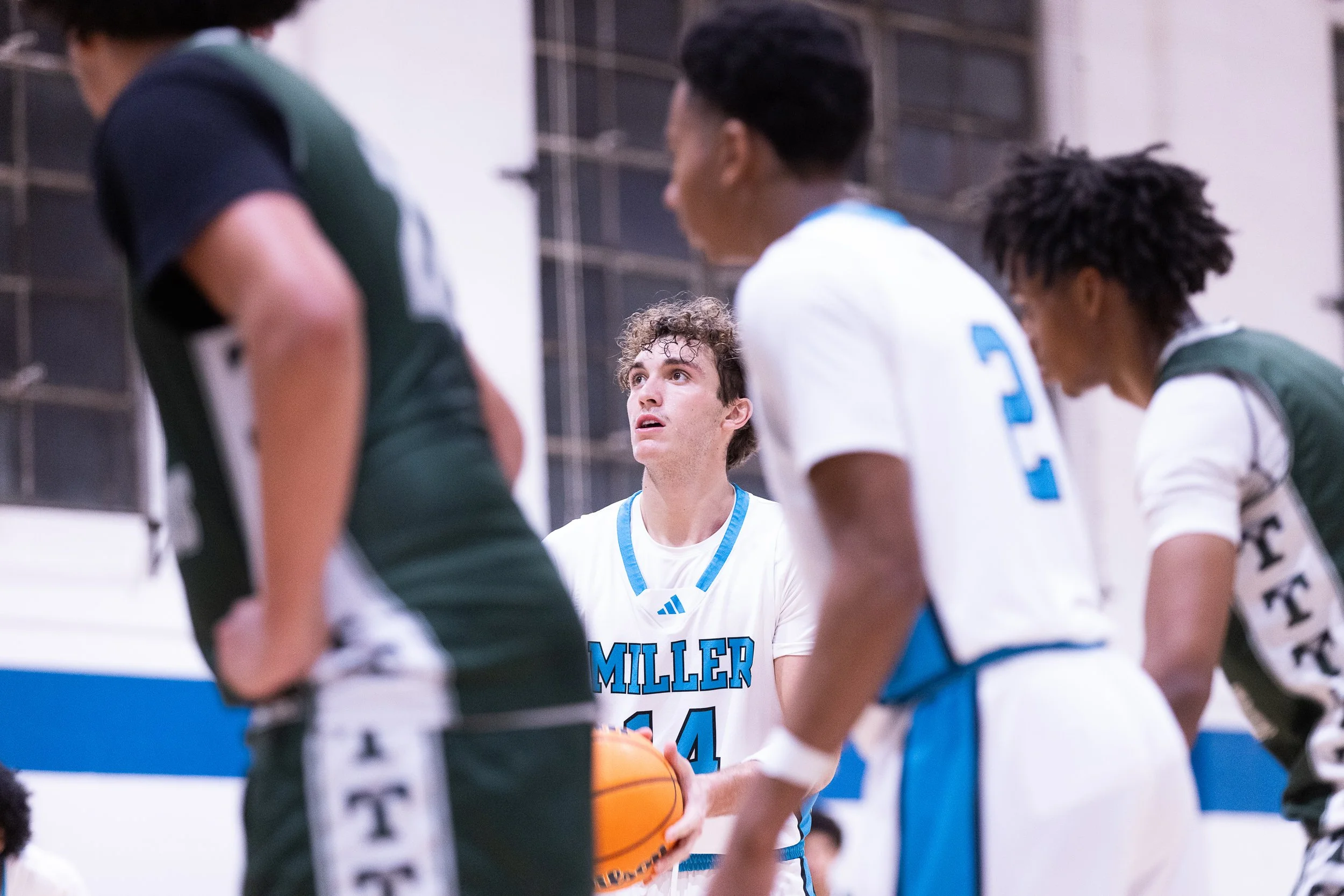
Head coach Jack Meriwether has a clear rule. If a player is open from three, he shoots. If he misses, they move on. If he passes it up, he comes out of the game.
The rule removes indecision. It replaces it with responsibility.
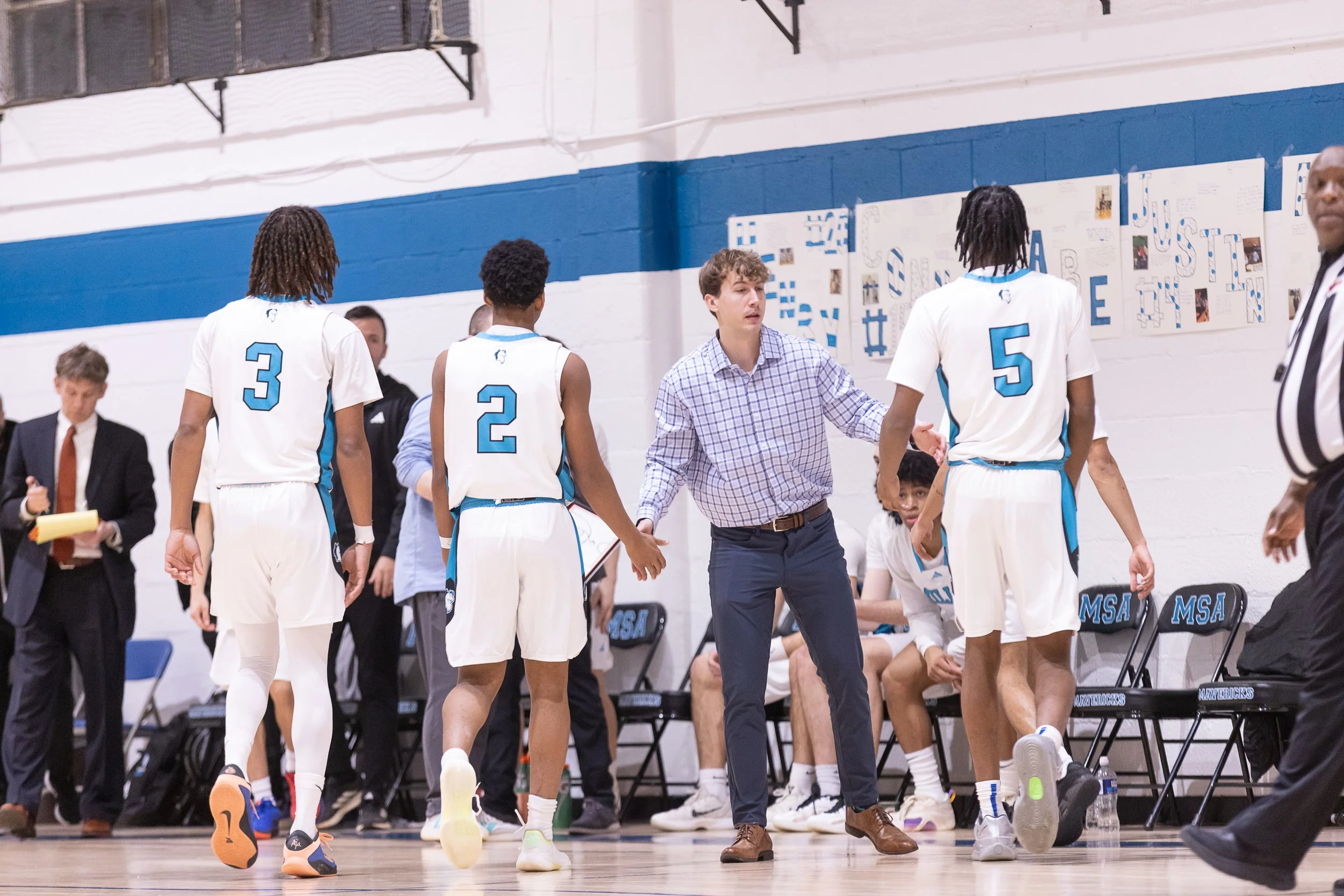
When Meriwether arrived at Miller in 2019 as a dorm director in Old Main and head coach of the varsity program, he inherited a team with a strong tradition but an opportunity for change. A Charlottesville native who had coached at West Virginia Wesleyan College and on the Boo Williams EYBL circuit, he brought a different pace and structure to the program.
Alongside assistant coach Colby Summers, he installed an offense built on spacing, quick decisions, and trust. Players were asked to play freely, but not loosely. Shots were expected. Ball movement mattered. Roles were defined, but initiative was required.
Over time, the results followed.
Meriwether’s teams have made seven state tournament appearances, reached five semifinals and four straight finals, and now, with this winter’s run, secured three consecutive VISAA Division II State Championships. Along the way, the program has produced All-State players, two state players of the year, and a steady pipeline of college athletes.
But this season asked something different.
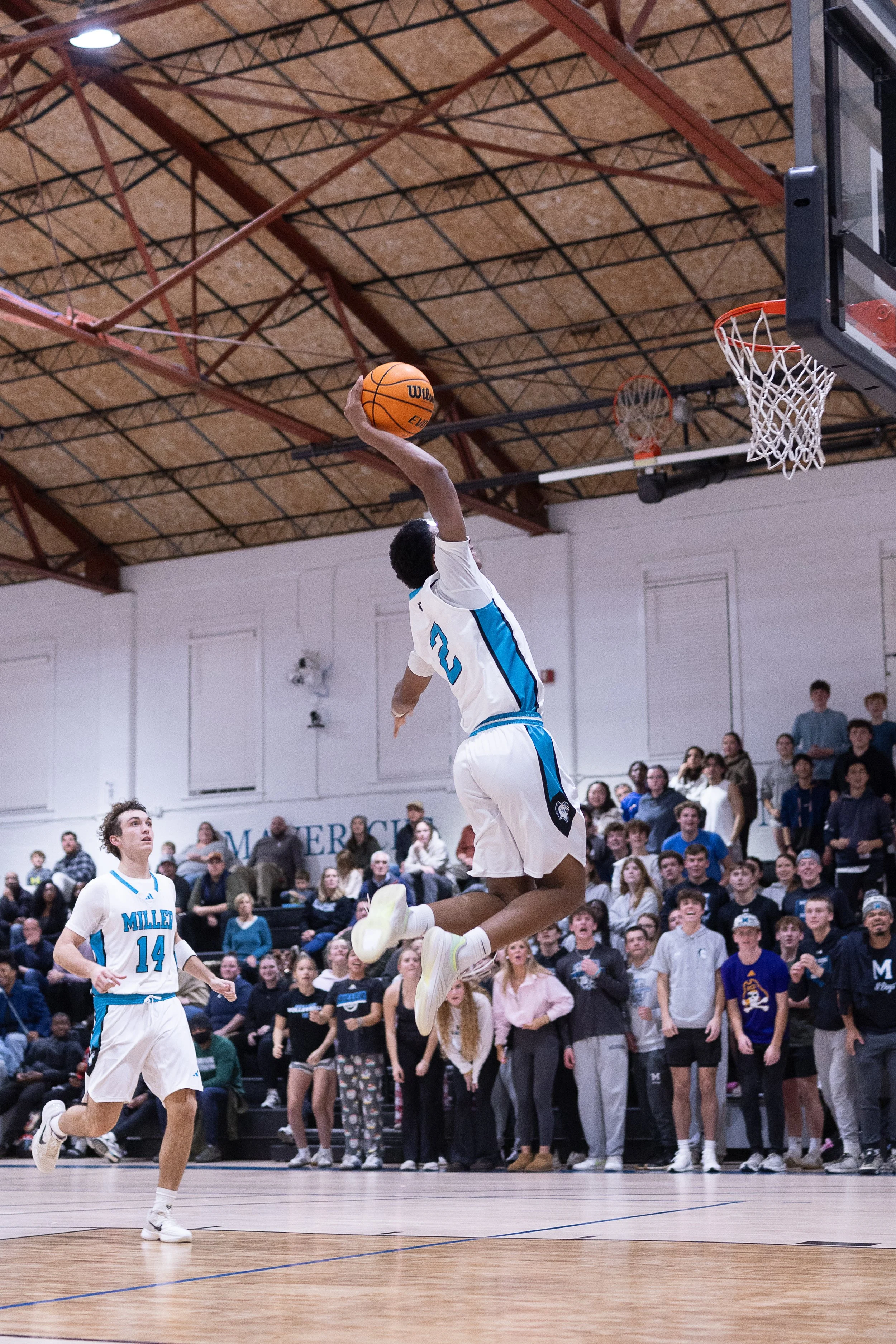
Unlike the previous two championship runs, this group did not move through the postseason with ease. The roster itself was new in key places, with several of the team’s leading contributors arriving this year. Building continuity took time.
So did the path to the title.
In the state final, a 63–55 win over Fairfax Christian, the game never settled into rhythm. As reported by the Daily Progress, the first half was defined by defense, with both teams combining for just 29 points. Miller’s preparation showed early, holding a high-powered opponent to 15 points before the break.
The second half required something else.
The pace shifted. Shots had to fall. And, more importantly, players had to trust the same approach that had carried them all season.
Midway through the second half, with the game still within a possession, Odita Aguolo knocked down a three from the wing. On the next stretch, Gabriel D’Alessandro attacked the rim for a layup. Moments later, Aidan Gregory connected from the top of the key. Another three from Aguolo followed.
The sequence—a 12–3 run—created the separation Miller needed. It was not one play, but a series of decisions made without hesitation.
Gregory finished with 14 points and seven rebounds, while D’Alessandro and Connor Lyons each added 12. Aguolo and Justin Hunter contributed eight apiece, with Hunter and Jaiden Hunter controlling the glass.
But the numbers, as always, only tell part of the story.
The game demanded execution over four quarters. Possessions mattered. The margin for error narrowed, and with it came a different kind of pressure.
What carried the team through was not a single performance, but a shared understanding of how they were expected to play.
They defended with discipline. They moved the ball. And when shots came, they took them.
The same principle that defined a possession in November held in late February.
For Meriwether, that consistency is the point. The system is not built for one group or one season. It is meant to hold, regardless of who steps into it.
That continuity has defined his time on the Hill. In seven seasons, his teams have not only won, but sustained a standard that extends beyond results to the way the game is played and taught.
By the time the final buzzer sounded, the significance of the moment was clear. A third straight title. The first in program history.
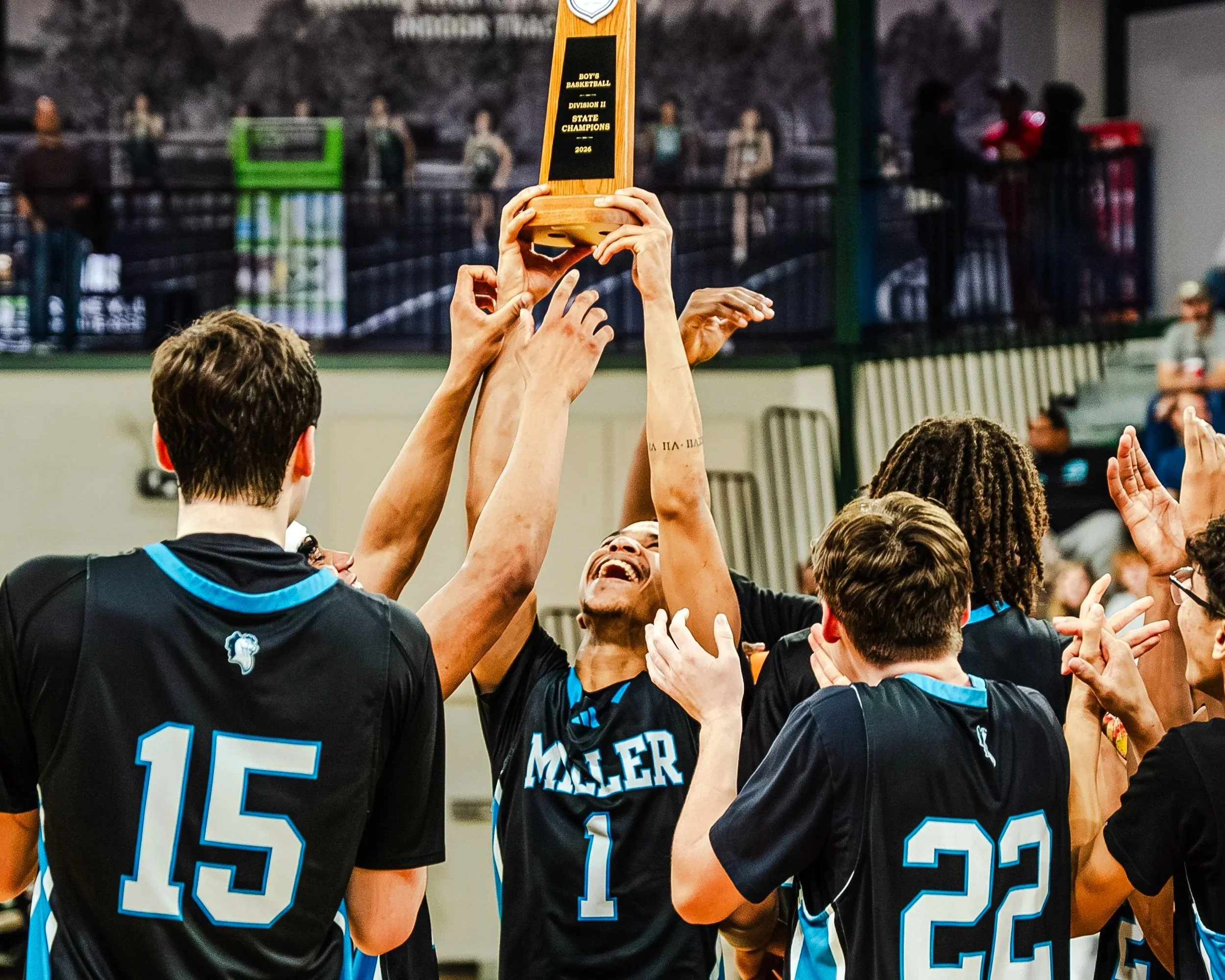
But like most things in the program, it was less about a single moment and more about the accumulation of them.
A possession where the right pass was made. A shot taken without hesitation. A system trusted, again and again, until it became habit.
The quote still holds.
You miss 100% of the shots you don’t take.
At Miller, the expectation is simple.
Take it.