On most winter mornings, the woodshop hums with the steady rhythm of machines, measurements, and material taking shape under careful hands. During Winter Week of Wisdom and Wonder, that rhythm moved outdoors.
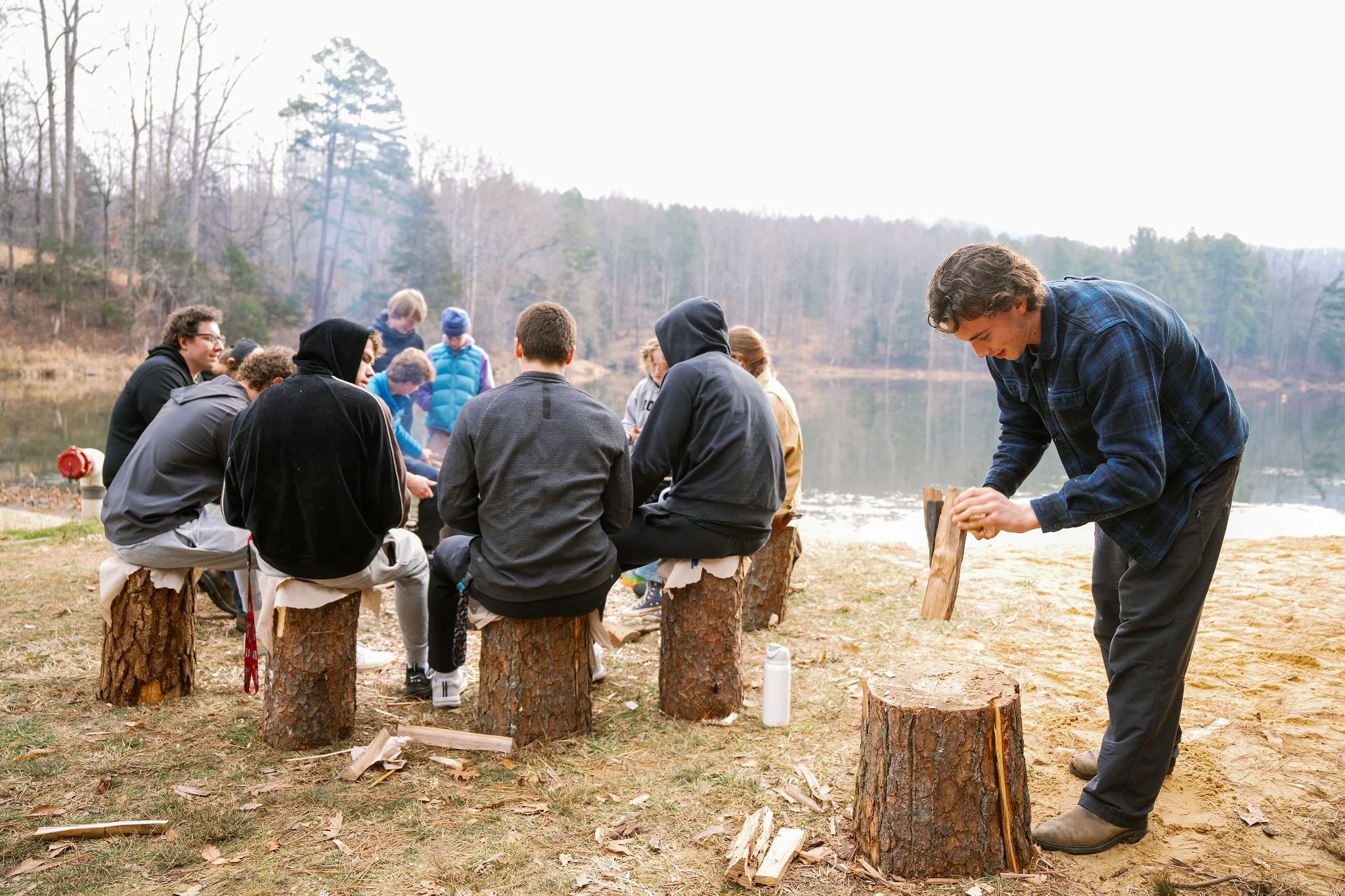
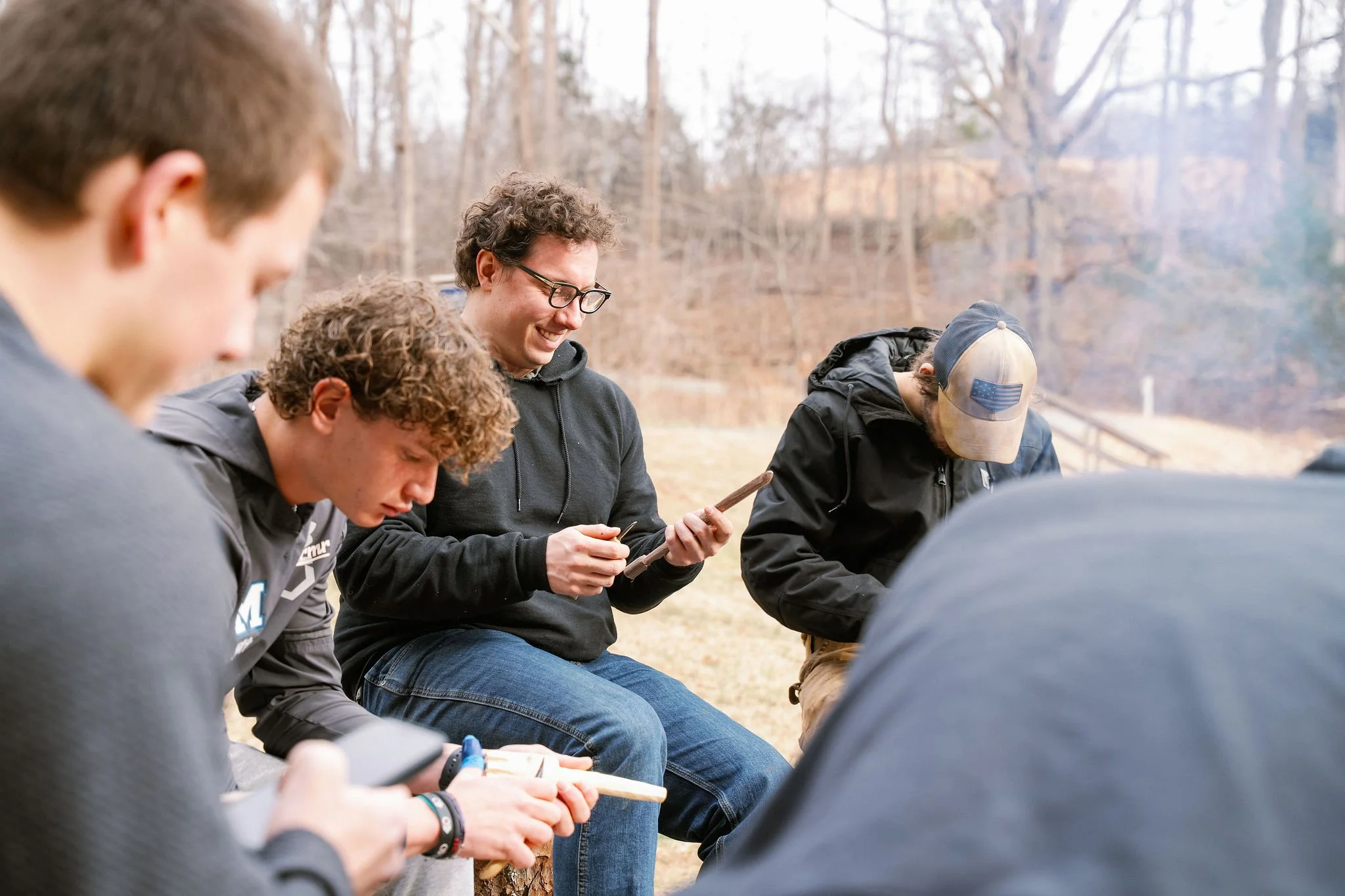
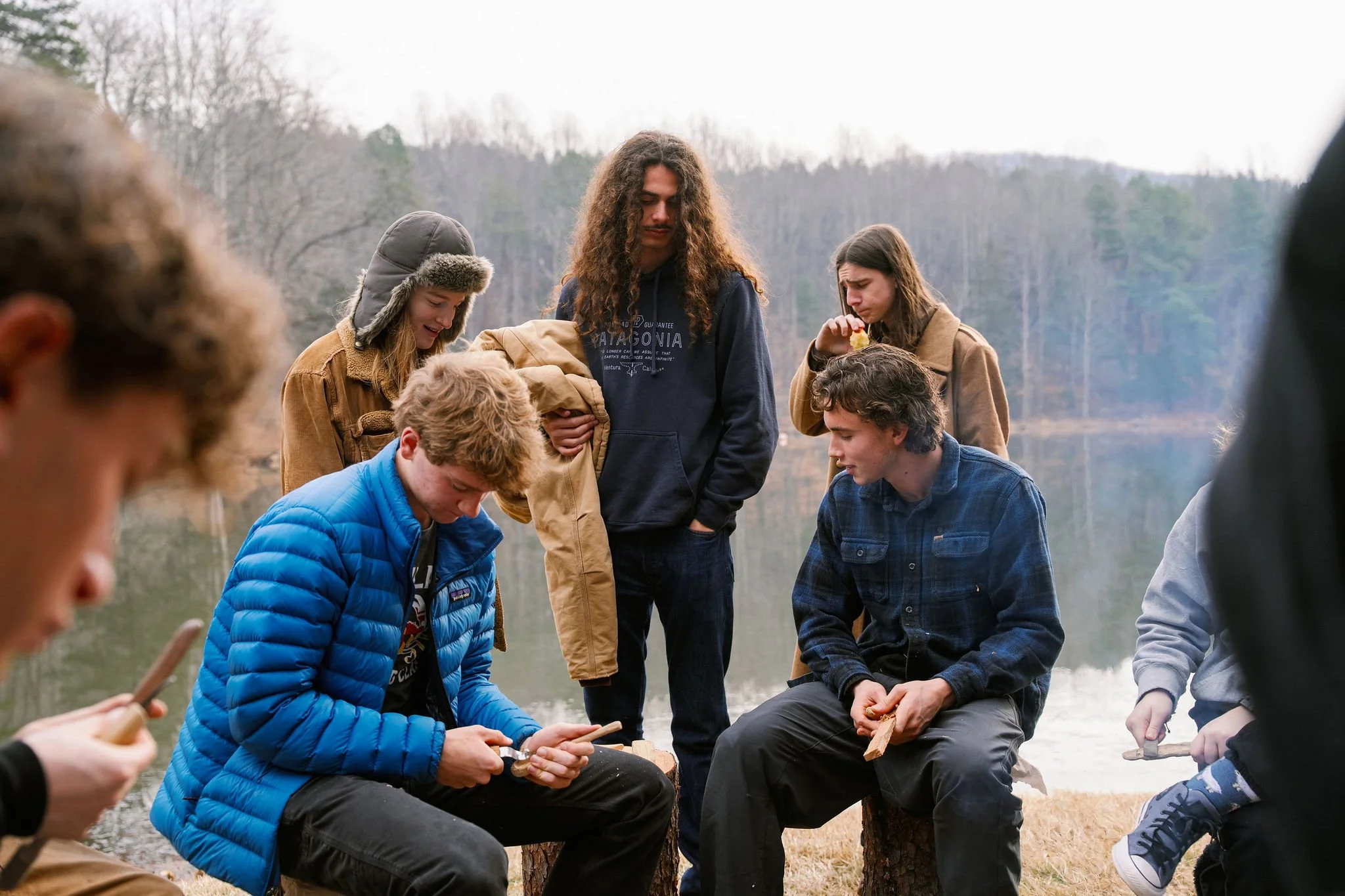
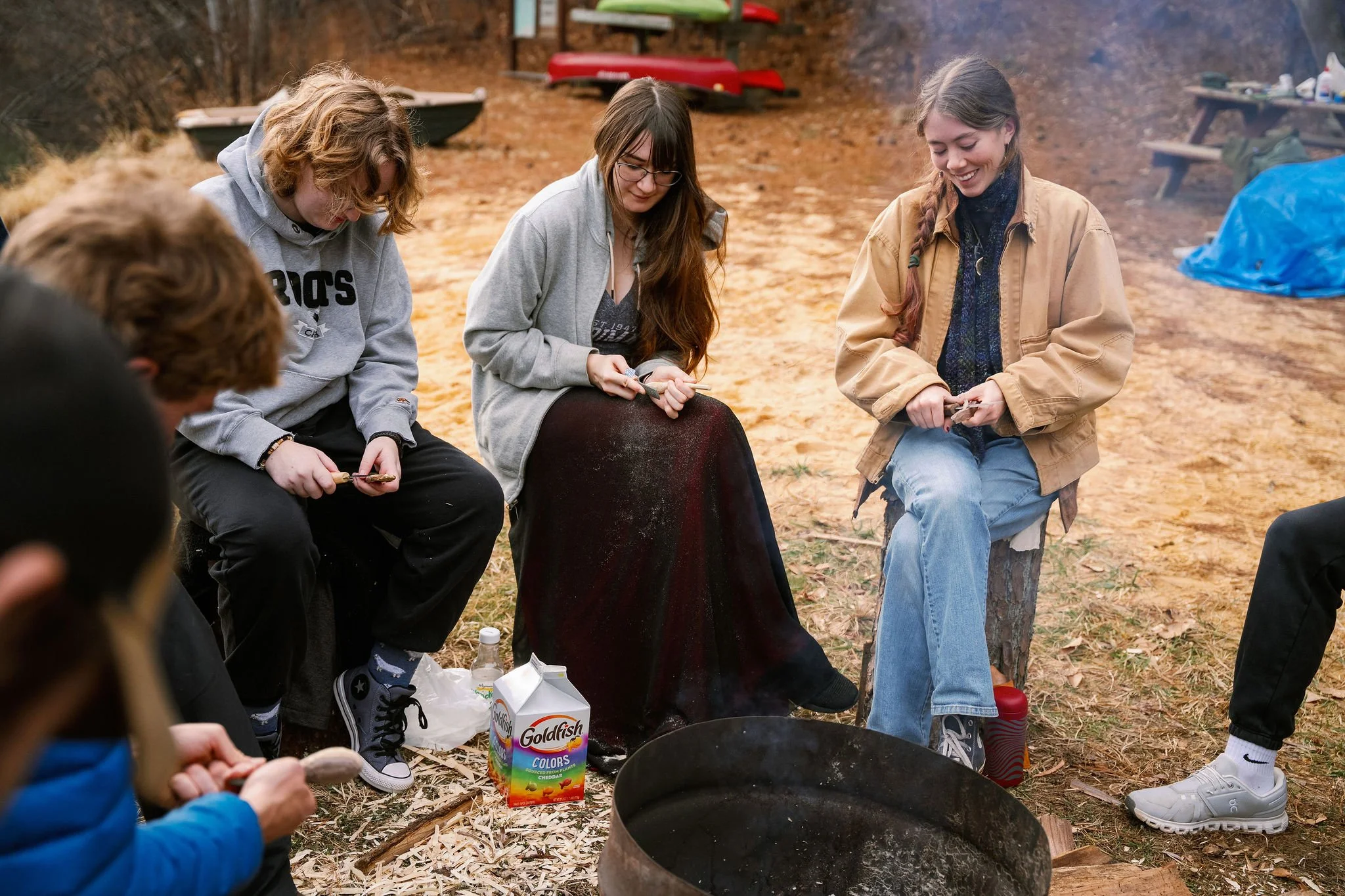
At the edge of Alumni Lake, a fire burned against the cold. Students gathered in a loose circle, blocks of wood in hand, carving knives working slowly through grain. Under the guidance of Design/Build teacher Matt Olowin, the assignment was simple: make a spoon.
Like many things at Miller School, the simplicity was deceptive.
Olowin’s course, set against the backdrop of a twelve-acre lake and a quiet stretch of campus, asked students to slow down and work without the usual safety net of machines or quick corrections. Each cut required attention. Each decision stayed with the piece. There was no rushing the process, only a steady negotiation between hand, tool, and material.
It is a lesson that sits at the heart of Miller’s Design/Build program. Students learn not just how to use tools, but how to think about structures, materials, and the process of making something that lasts.
Around the fire, those ideas took on a more elemental form.
Olowin, who trained in industrial design at RIT and spent years working in fabrication shops from New York to Massachusetts, brings a wide-ranging perspective to the woodshop. His background spans custom furniture, product development, and large-scale public projects. But whether in a Brooklyn shop or beside a lake in Albemarle County, the core of the work remains the same: understanding how things are made, and why that process matters.
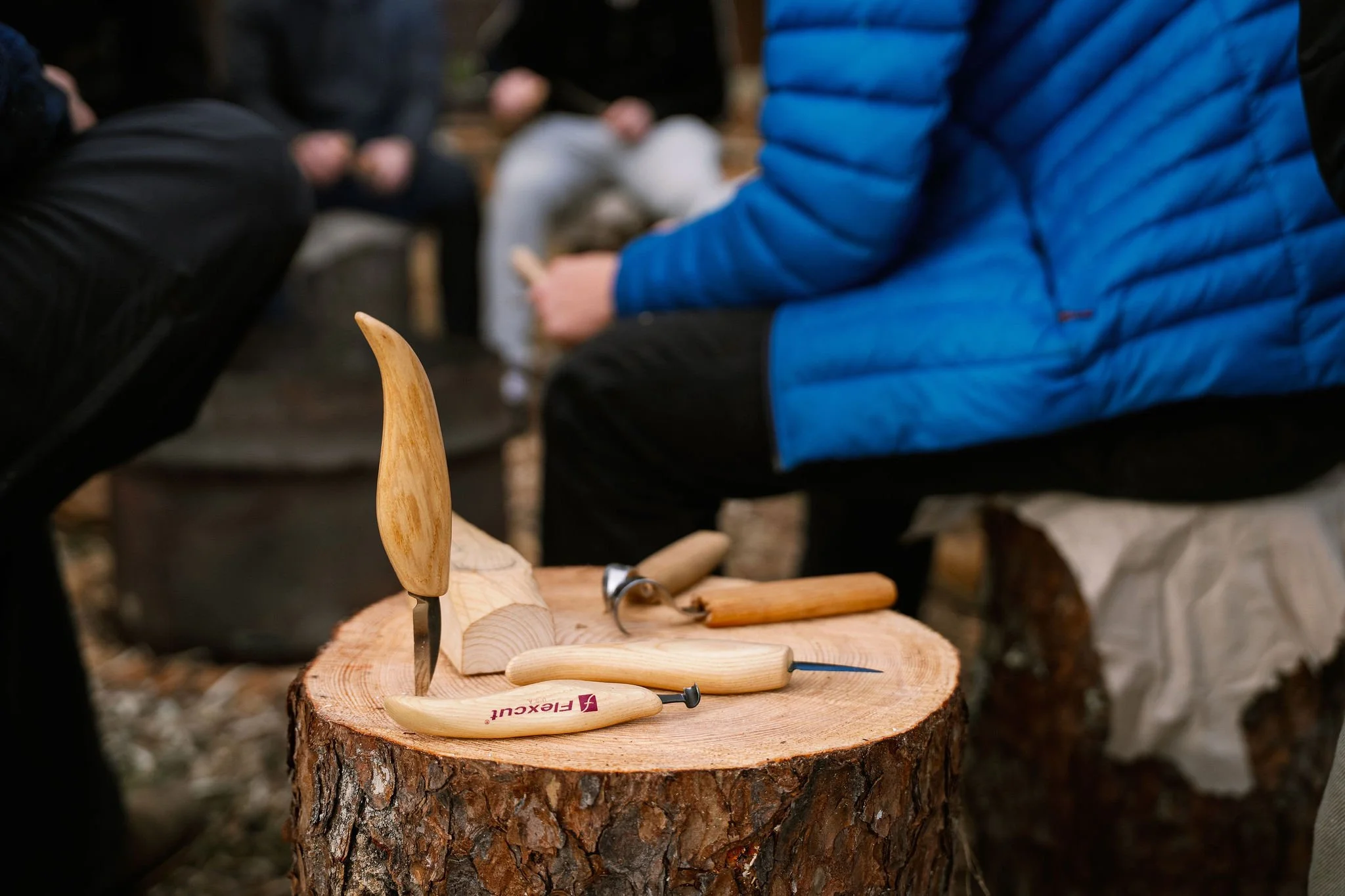
That philosophy aligns naturally with Miller’s broader approach to education. Since its founding, the school has placed equal value on mind, hands, and heart, encouraging students to engage directly with the world around them through hands-on learning.
In this course, that meant embracing both the environment and the limitations it imposed. The cold air sharpened focus. The fire provided just enough warmth to keep working. Conversation came and went, often replaced by long stretches of quiet concentration, the kind that is increasingly rare in a fast-moving school day.
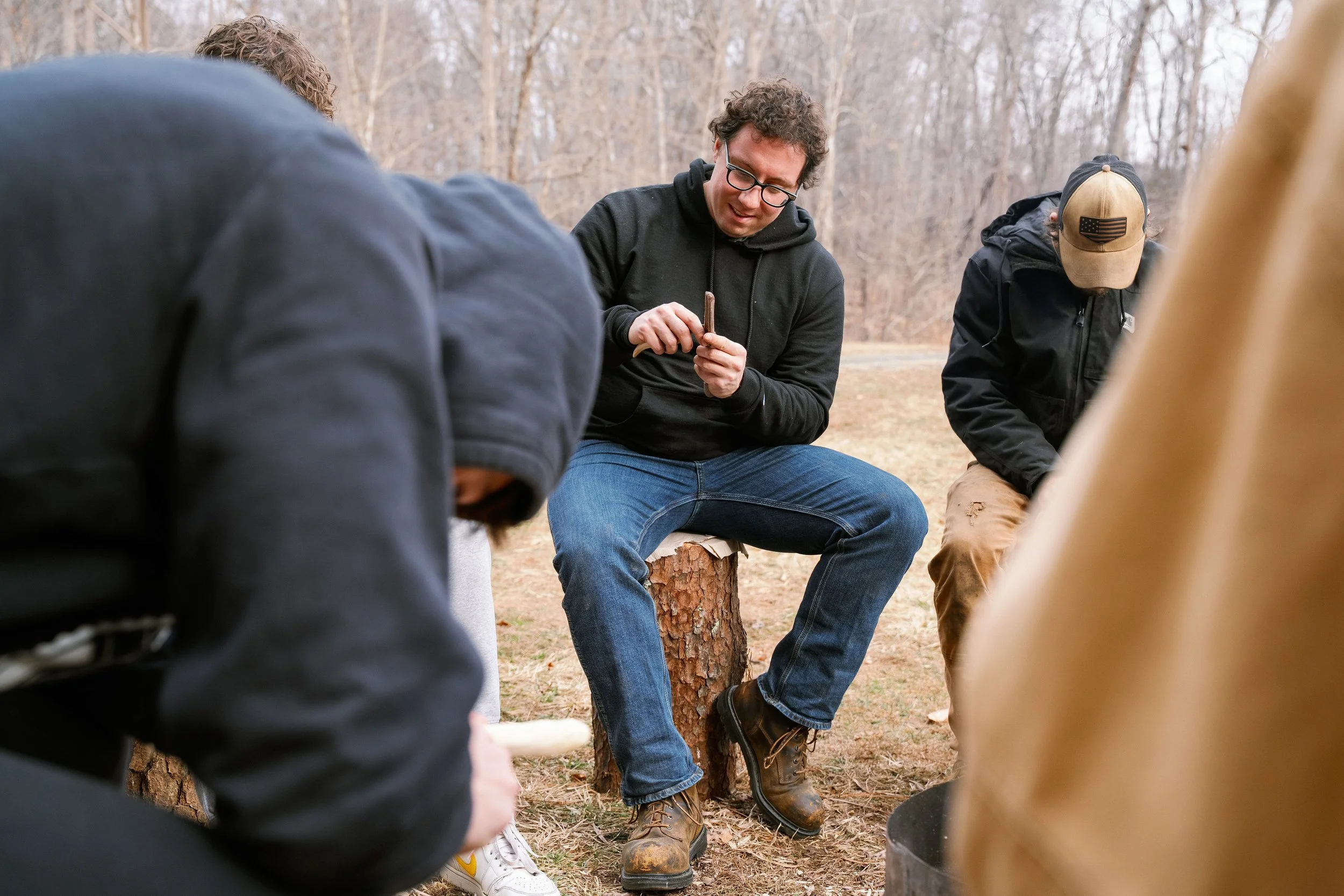
By the end of the week, each student carried away a finished piece. Some spoons were refined, others still bore the marks of early cuts. All of them told a story of process, patience, adjustment, and persistence.
What began as a block of wood had become something useful, shaped entirely by hand.
And perhaps more importantly, something designed and built in nature from nature.