
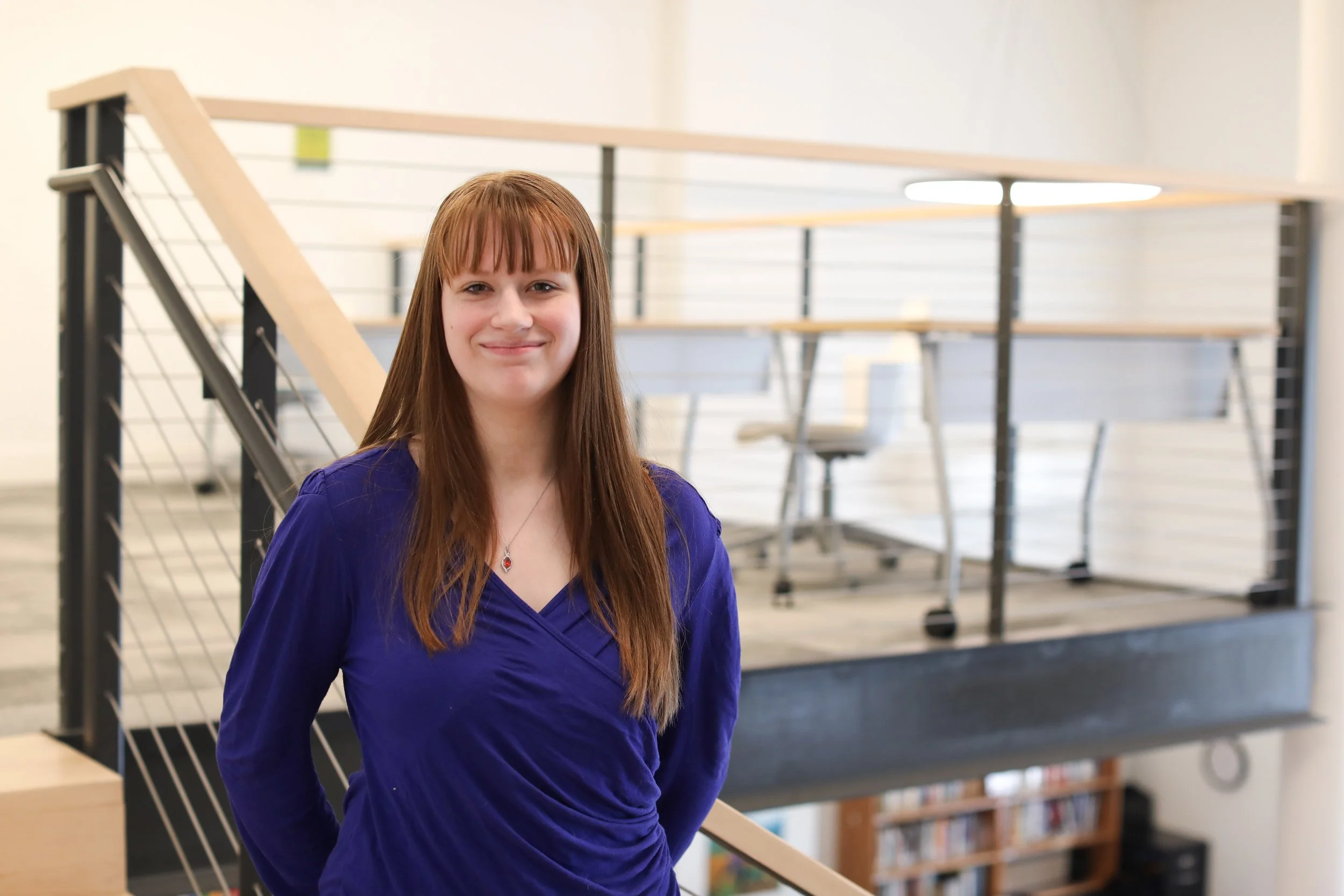
In storytelling, a “through line” is the thread that runs through a play, film, or novel — the connecting theme, motivation, or characteristic that links each scene and gives the whole story shape. For Lilah Davis, that thread is easy to spot.
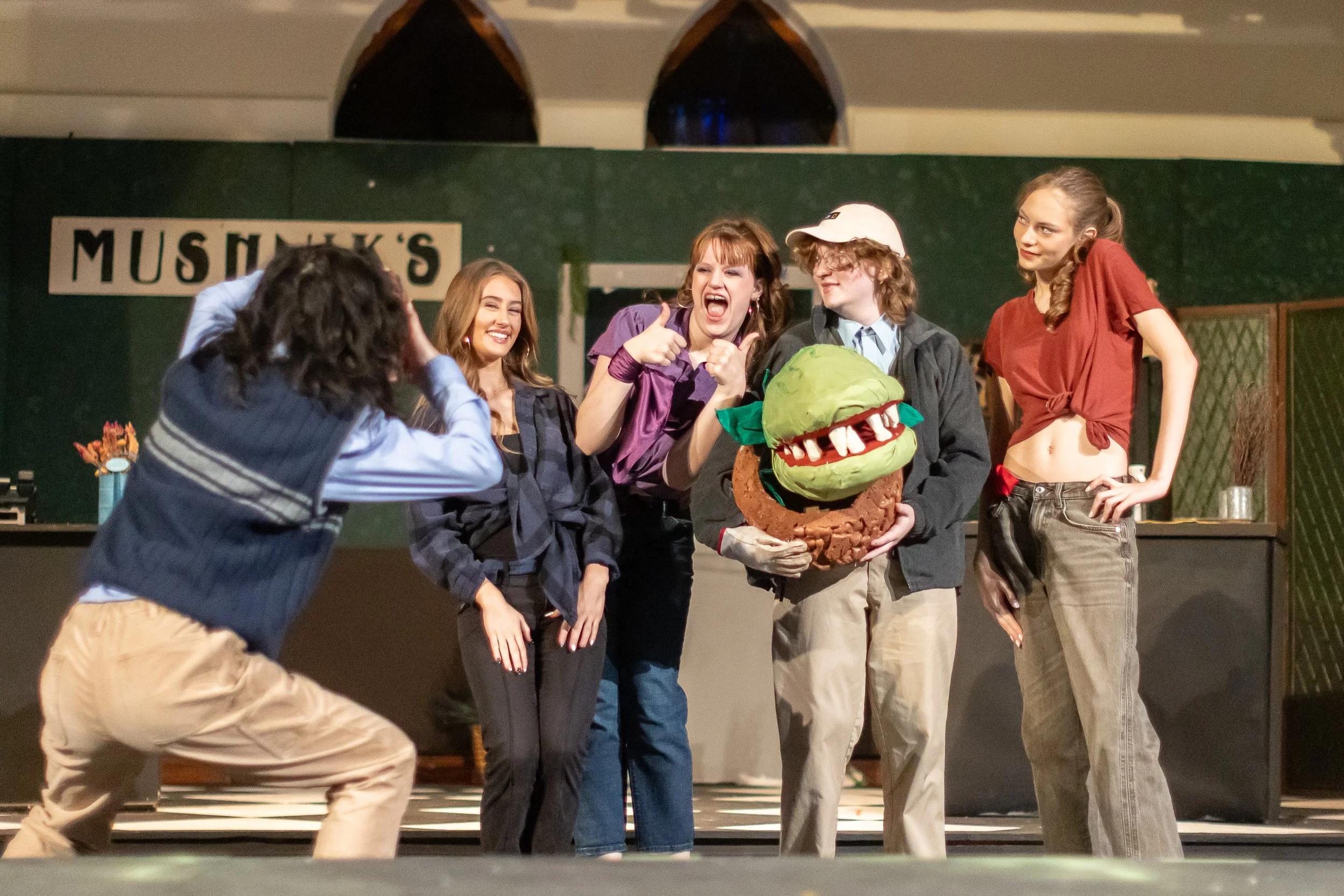
On a recent afternoon in the chapel, music from Little Shop of Horrors carries through the space while Lilah Davis counts off steps from the front. As assistant choreographer for the fall musical, she watches closely as classmates run a sequence, then pauses the group to adjust spacing or timing. A few minutes later she steps back into the line herself, shifting from leader to performer without missing a beat. It is careful work, the kind that requires patience and attention to small details. For Lilah, this rhythm—lead, participate, adjust—is not just rehearsal. It is a pattern that shows up in many parts of her life on the Hill.
A sophomore from Charlottesville, Lilah came to Miller looking for an in-person high school experience where teachers would know her and help her work toward her goals. Family friends had spoken about the school, but it was the promise of individual support and room to grow that stood out.
In the classroom, she gravitates toward history and language. In AP Human Geography, she found a course that asked students to think broadly while staying grounded in detail. “Mr. Adeline helped us understand the AP curriculum and we covered seven units in just a few months,” she says. The pace pushed her to organize information and see connections across topics.
French class with Ms. Franco offers a different kind of focus. “She really works on speaking and understanding fluency,” Lilah explains. The emphasis on conversation and feedback has helped her grow more comfortable using language in real time.
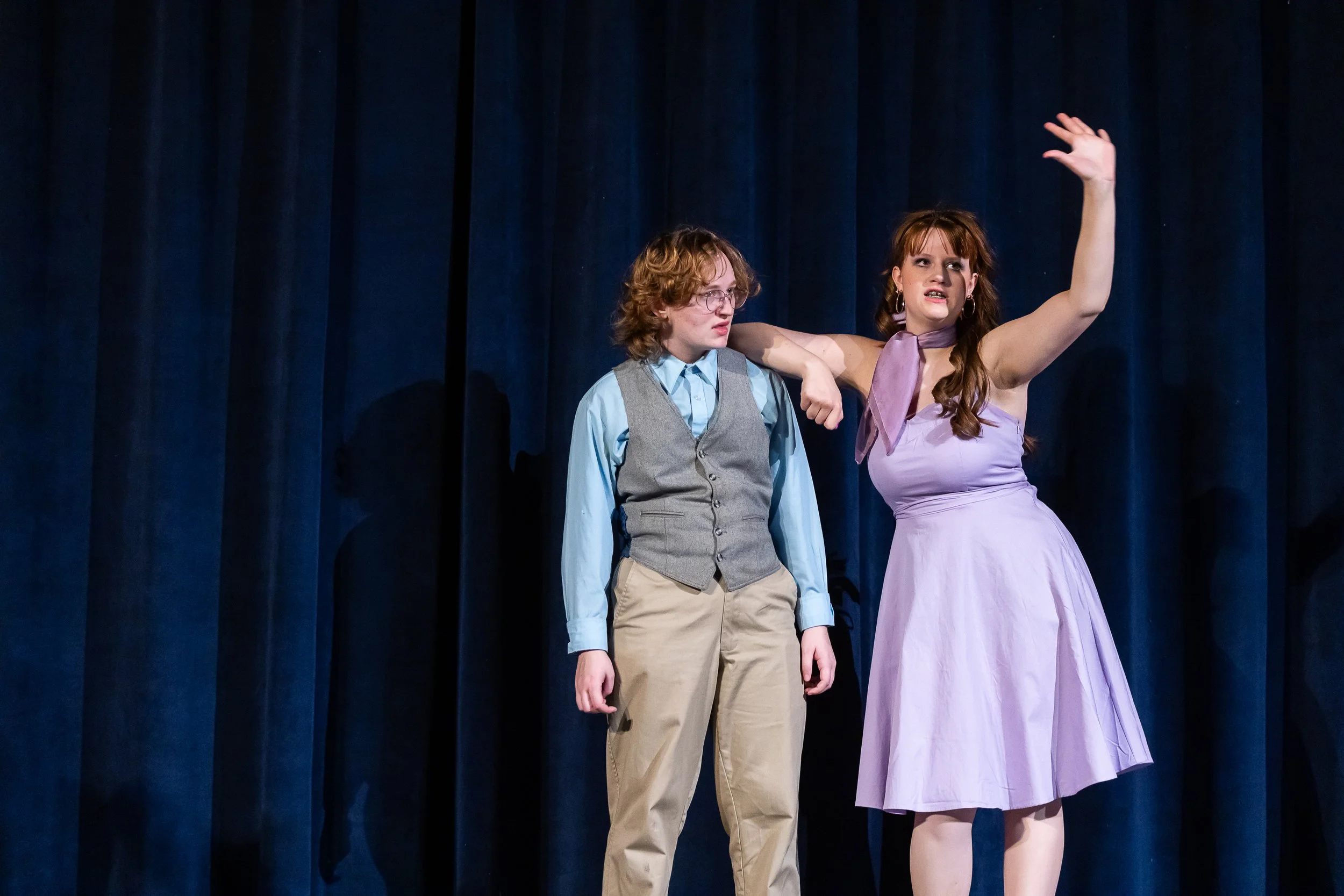
But much of Lilah’s confidence has grown on stage. Acting and dance are not side interests for her; they are central to how she expresses herself. This year she served as Assistant Choreographer for the fall production of Little Shop of Horrors, helping guide movement while also performing. Next year she will take on the lead choreography role. Theater asks her to read a room, communicate clearly, and help a group work toward something shared—skills that carry into other parts of her school life.
At the end of her first year, she ran a campaign and was elected SGA Secretary. The role gave her an early look at what it means to represent classmates and listen carefully to their ideas. “Being a representative of the student body and listening to what people want is important,” she says. Whether she is in rehearsal or in a student government meeting, the work is similar: paying attention, helping people feel heard, and keeping a group moving in the same direction.
Her interest in storytelling shows up in other ways as well. She was chosen as editor of The Bell Tower school magazine and Assistant Editor of the Yearbook, roles that ask her to help shape how the community tells its stories—on stage, on the page, and in photographs.
The boarding program has broadened her experience in ways she did not expect. Lilah talks about it in terms of people. “I feel like I have my own map of friends now,” she says. Living alongside students from around the world has given her daily chances to practice languages in natural settings—speaking Chinese with friends, building fluency in French, and strengthening her understanding of Spanish through conversation. Language, for her, becomes another form of connection.
When asked to describe Miller School, Lilah turns to the school’s core values: Minds, Hands, Hearts. She sees them in the intellectual energy of her classes, the hands-on nature of rehearsals and projects, and the sense of community that shows up at games, performances, and admissions events.
Looking ahead, she has a clear picture of how she hopes to use her time on the Hill. She plans to return to student government, serve as Editor in Chief of the Yearbook as a senior, and continue leading in the theater program. She is also interested in pursuing an independent language study, possibly in Korean or French, and exploring an internship opportunity.
Later, as rehearsal winds down and students gather their things, Lilah lingers a moment to talk through a transition with a classmate. It is a small exchange, easy to miss, but it mirrors how she moves through her days—part performer, part organizer, part listener. Whether she is under stage lights, behind the scenes, or seated at an SGA table, the work looks similar: paying attention, helping others feel included, and shaping the rhythm of the group. On the Hill, she is still trying new roles, but the through line is already clear—she leads by noticing what others need and helping the group move forward together.