
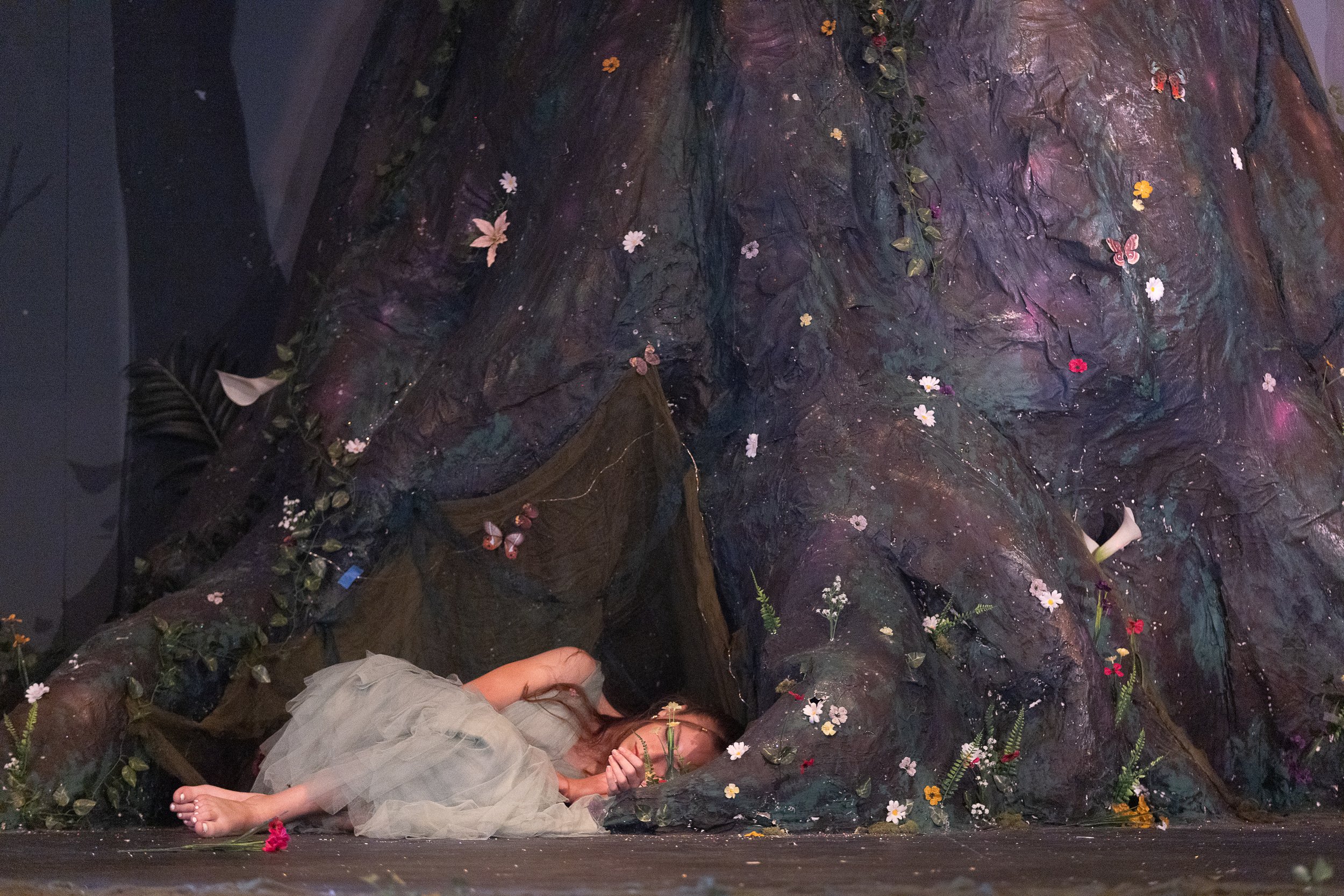
At the beginning of Shakespeare’s A Midsummer Night’s Dream, the world feels rigid and controlled. Parents choose who their children will marry. Authority speaks with certainty. Love is treated less as a mystery than as a problem to be managed.
So the young lovers flee.
They escape Athens and disappear into the forest, a place where convention loosens its grip and the ordinary rules of society no longer seem to apply. There, identities blur. Affections shift. Characters fall in and out of love with dizzying speed. The forest becomes a space of experimentation and confusion, but also discovery.
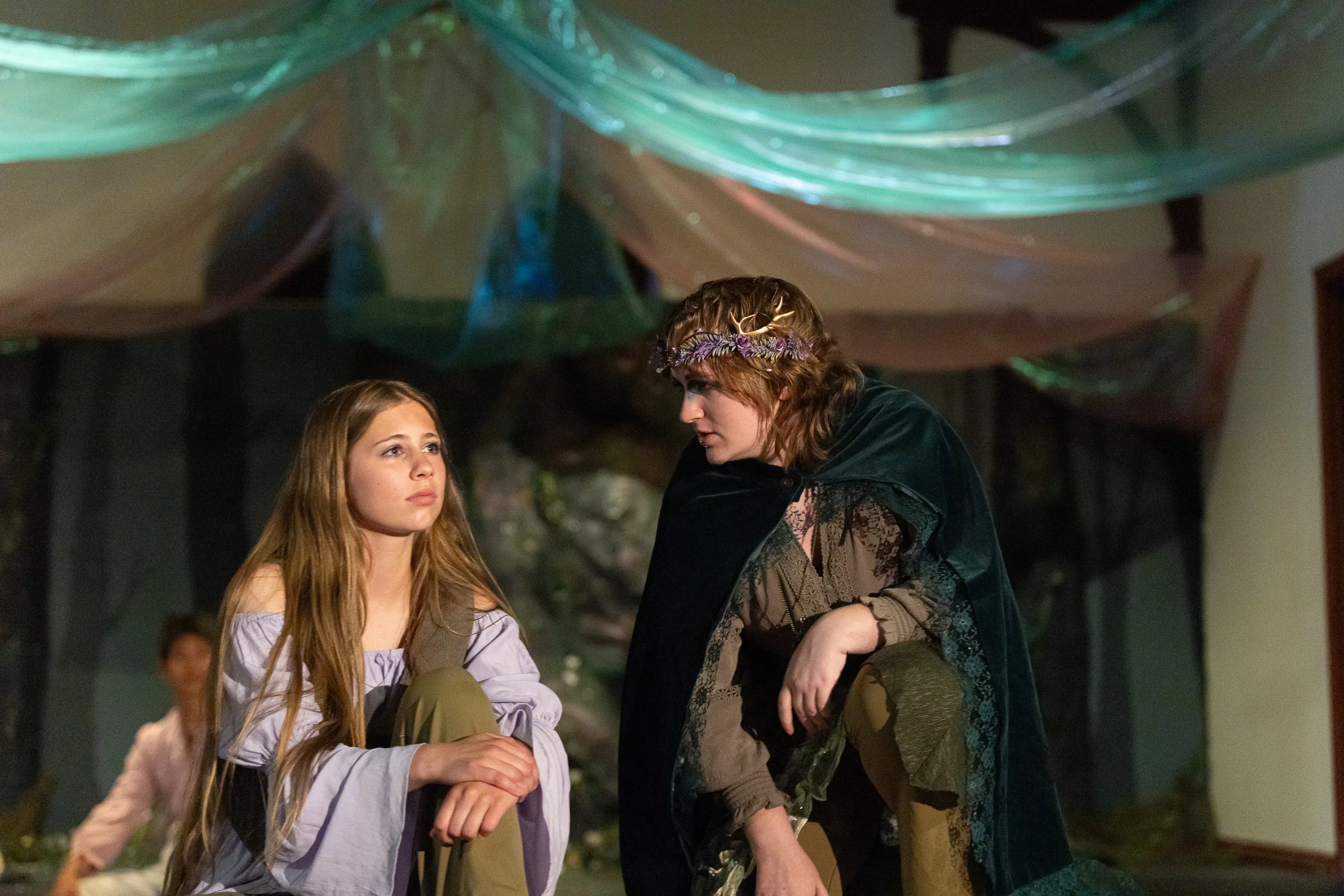
Literary scholar Paul Cantor often wrote about this tension between nature and convention in Shakespeare’s comedies. In his reading of A Midsummer Night’s Dream, the forest is not simply chaos for chaos’s sake. It is a necessary escape from rigid social expectations, a place where characters can explore desire, imagination, and possibility before returning to society changed by what they experienced there.
That tension between structure and creative freedom sat at the center of Miller School’s recent production of the play.
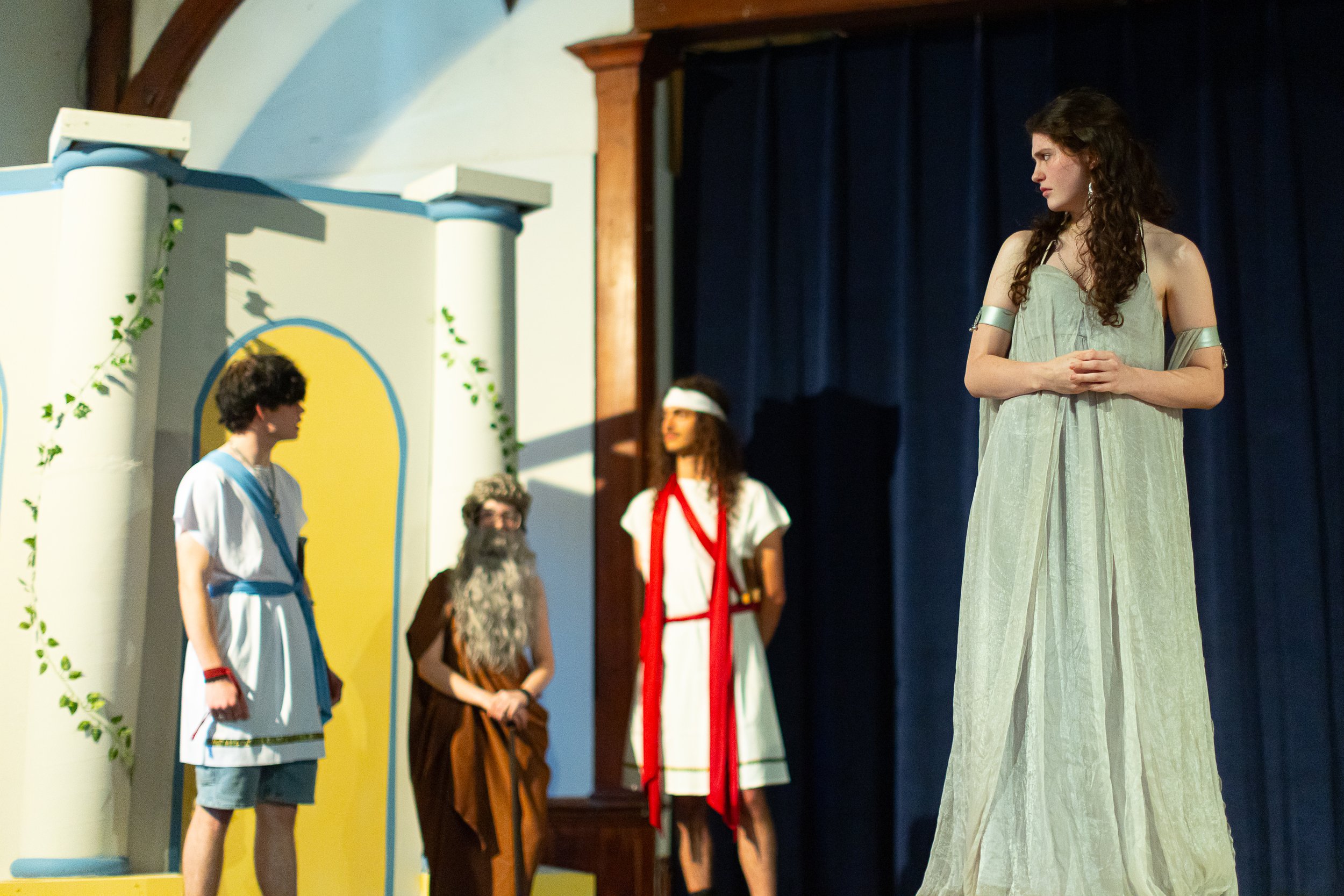
Under the direction of Chris Celella, students transformed the Chapel Theater into a living forest filled with twisting textures, layered scenery, dramatic lighting, and moments of visual surprise. The set itself seemed to blur the boundary between the natural and the theatrical, creating a dreamlike world where Shakespeare’s themes could fully emerge.
But what made the production especially memorable was the way students helped build that world themselves.
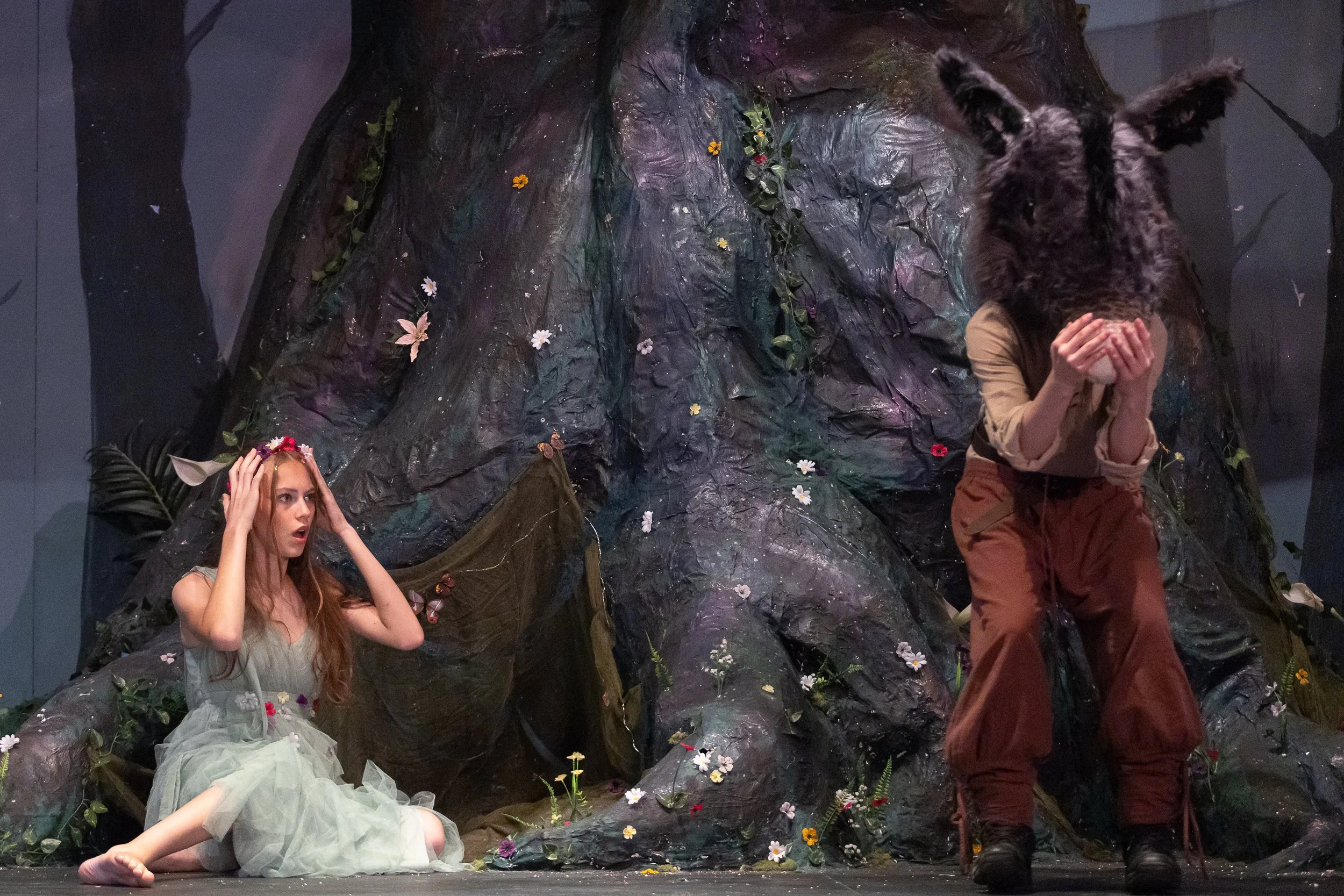
Actors shared the production with student designers, artists, technicians, and backstage leaders who helped shape nearly every aspect of the performance. The production became an example of the deeply cross-curricular nature of Miller School’s Fine Arts Department, where theater overlaps with visual art, engineering, music, design, and craftsmanship.
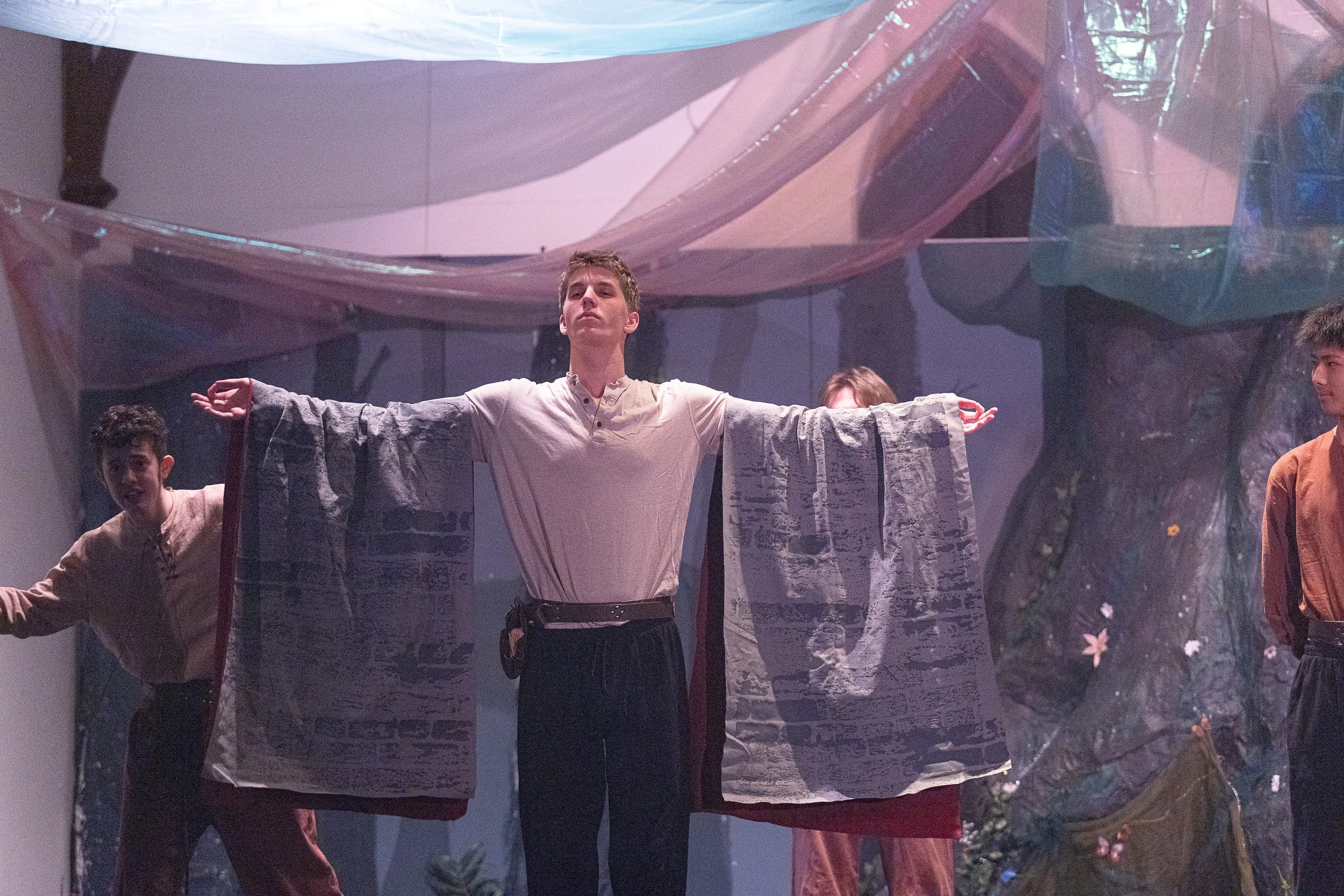
That collaborative spirit reflects the philosophy Mr. Celella has cultivated on the Hill for years. Students are encouraged not simply to perform art, but to construct it together. A set is not just scenery. Lighting is not merely technical. Every element contributes to storytelling.
In many ways, the process behind the production mirrored Shakespeare’s play itself.
The students entered a creative space where experimentation mattered more than certainty. Ideas evolved. Designs changed shape. Leadership emerged in unexpected places. Like the lovers wandering Shakespeare’s forest, students were given room to explore before bringing what they discovered back into the structured world of performance.
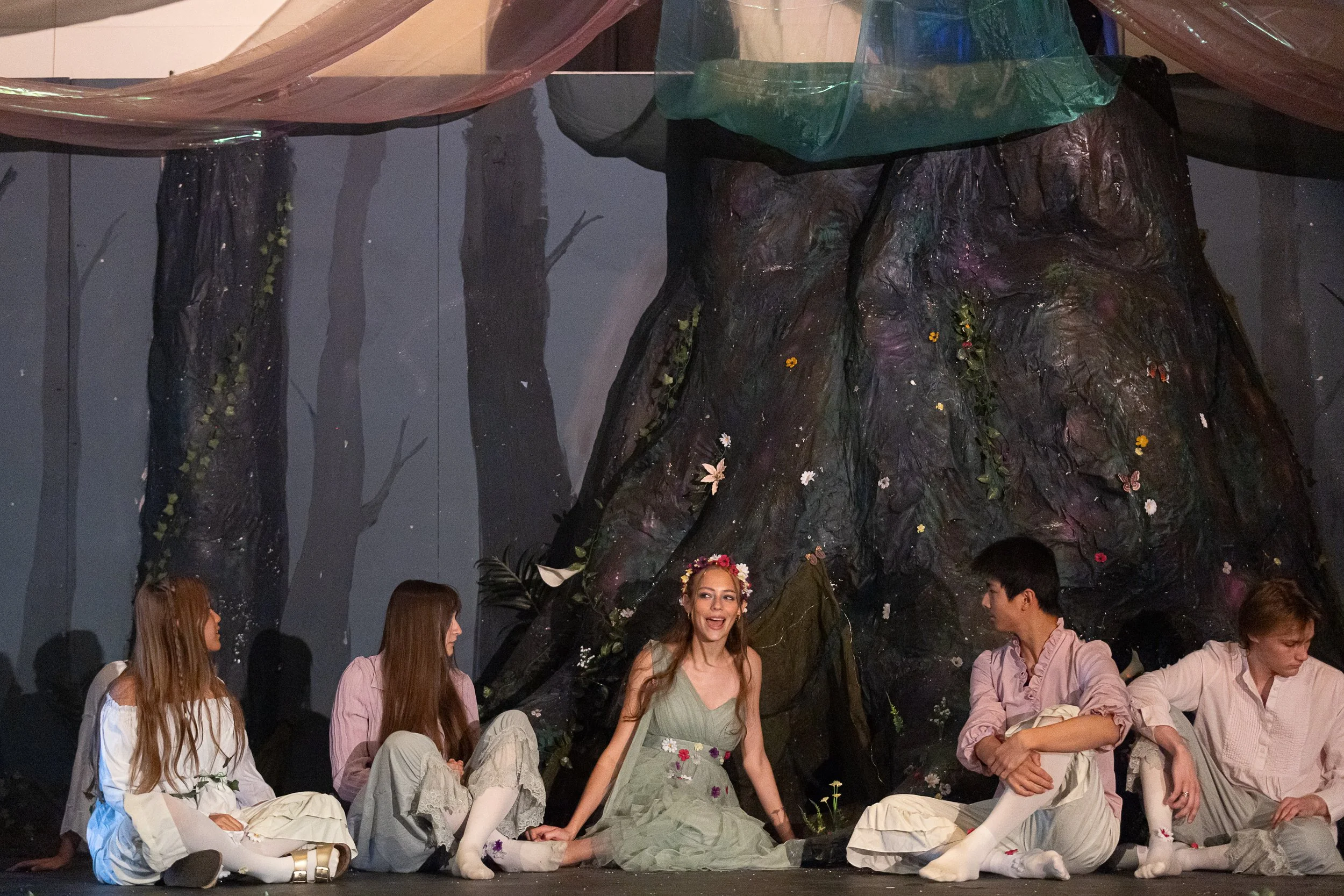
And by the end of the play, as in Shakespeare’s comedy, everything returned to order. But it was not the same order from the beginning.
The characters of A Midsummer Night’s Dream return from the forest with a deeper understanding of themselves and one another. Miller School students emerged from the production with something similar: the experience of creating a complex work of art together, and the understanding that the best education often happens in the space between convention and imagination.